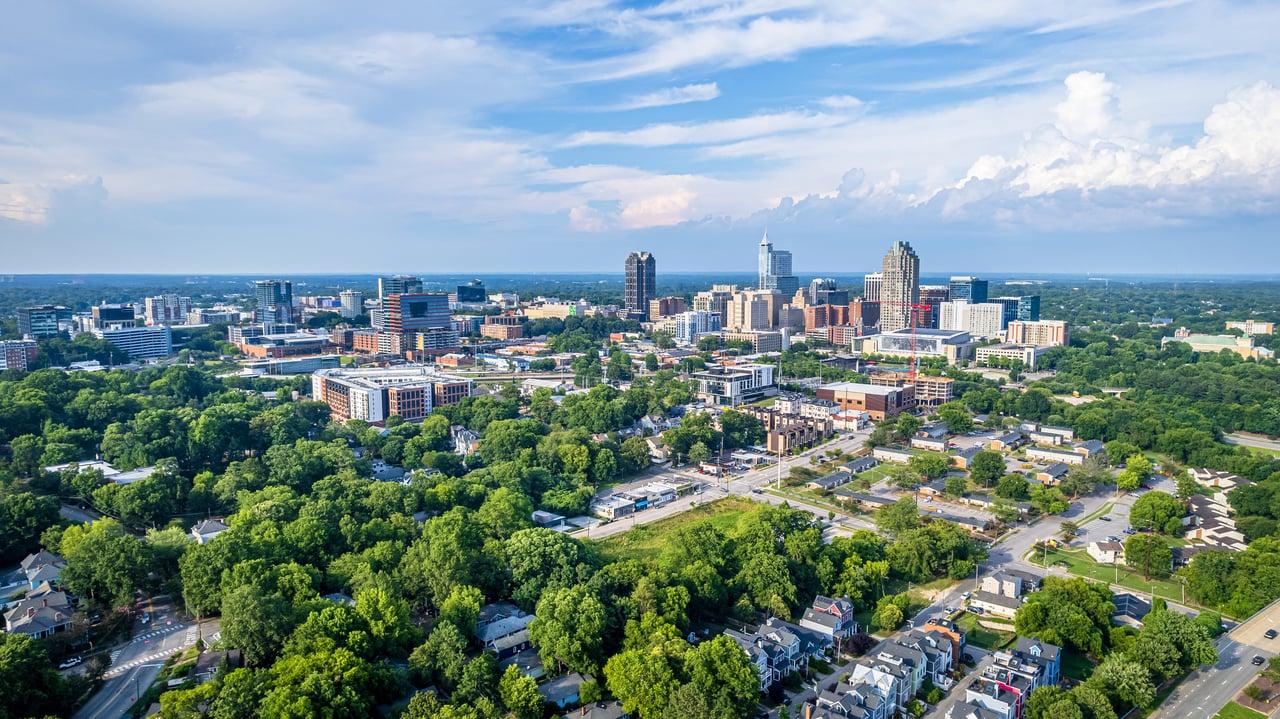
Two homes, two blocks apart, can be headed in completely different directions over the next 20 years. The reason is a policy document most buyers and sellers never read.
Raleigh's Planning and Development Department is rewriting the city's 20-year Comprehensive Plan, shifting growth policy away from outward expansion and toward denser, mixed-use development along major corridors. For anyone buying, selling, or investing in the Triangle, this is not a bureaucratic footnote. It is the framework that will shape where new homes and businesses can go for the next two decades. Here is what the Raleigh Comprehensive Plan rewrite means, and how it affects decisions being made right now.
The Short Version
Growth is moving to the corridors. The rewrite steers new density toward major roads and transit routes, not the suburban edge.
Location relative to a corridor matters. A home on a corridor and a home two blocks away can see different change over time.
It affects pricing and buying today. Developers and lenders already read these plans. Buyers and sellers should too.
Why is Raleigh rewriting its Comprehensive Plan?
Raleigh has grown quickly, and that growth has brought real pressure: flooding in low-lying neighborhoods, heat in areas with shrinking tree canopy, and traffic on corridors designed for a smaller city. The existing plan was written for a different Raleigh. The city is now planning for the one it has become.
Concentrating new housing and commercial space along corridors, rather than extending the suburban edge, lowers the per-resident cost of roads, water, and services. It also puts more housing closer to jobs, one of the biggest challenges for employers recruiting in the Triangle.
Developers read comprehensive plans before they buy land. Buyers and sellers should too.
When a city puts density into policy, it changes what gets approved, financed, and built. Lenders read comprehensive plans before they underwrite. Buyers who understand the direction of a plan can make better location decisions.
What does density along growth corridors actually mean?
A growth corridor is a major road, transit line, or infrastructure spine where the city intends to concentrate new development. Think of the arterials connecting Raleigh's core to surrounding neighborhoods, such as New Bern Avenue, Western Boulevard, and Capital Boulevard, where mixed-use development and transit investment are already taking shape.
On the Corridor
More change
Mid-rise homes above ground-floor retail, townhomes at key intersections, and apartment buildings near transit. Over time, these areas can see rezoning requests and redevelopment.
Between Corridors
More continuity
The plan is corridor-specific. Areas between corridors are generally expected to keep a lower-density character, with less change to the streets around them.
That distinction matters more than most people realize. A home on a quiet street two blocks from a corridor can gain closer access to shops and services as the corridor develops, while a home directly on the corridor may face rezoning pressure or redevelopment nearby. Knowing which side of that line a property sits on can change a purchase decision.
Planning Terms, in Plain English
Comprehensive Plan
The city's long-range policy guide for land use, transportation, housing, and development.
Future Land Use Map
The plan's map of what the city intends each area to become over time.
Zoning
The current, legally binding rules for what can be built on a property today.
Rezoning
A separate application process to change a property's zoning, often guided by the plan.
Growth Corridor
A route where the city encourages new density and mixed-use development.
How does the Comprehensive Plan affect home values in Raleigh?
Plan rewrites do not change values overnight, but they change the conditions that shape value over time.
Neighborhoods within or next to designated corridors can attract more investor and developer attention as the plan takes effect, because land that can be developed more densely can be worth more to a developer. That can work in a seller's favor, and it can mean more competition for buyers in those areas.
Neighborhoods outside the corridors, where the plan signals lower density will continue, tend to hold their character longer. For buyers who value stability, that can be exactly the appeal. Neither outcome is better for everyone. It depends on what you are trying to accomplish and on your timeline, which is why we work through this question address by address.
What should buyers check in corridor-adjacent neighborhoods?
The useful question is not whether the plan is being rewritten. It is whether a specific property sits in an area likely to change, and whether that change works for you. Three things to look at before you buy:
Check One
Current zoning versus future land use
These are two different documents, and they do not always agree. A property zoned single-family today can sit in an area the plan designates for mixed use, and that gap is where rezoning applications come from.
Check Two
Distance from the corridor
Properties within a few hundred feet of a major corridor are more likely to see rezoning pressure than those a half-mile away. Access to shops, services, and transit tends to improve closer in, but so does the chance of redevelopment next door.
Check Three
Infrastructure investment
Corridors receiving stormwater, streetscape, or transit investment alongside the rewrite are further along in the city's priorities. Investment follows policy, and policy follows investment.
Our team has watched these corridors evolve for more than 25 years, and we know which are already drawing investment and which are still years away from meaningful change. That context matters most for buyers relocating to Raleigh, who are researching neighborhoods without having seen the city change. Our Relocation Guide and Neighborhood Match tool are good places to start.
Wondering Where Your Property Sits?
Know which side of the line you are on.
We will walk you through how a specific address relates to the current draft plan, and what that means for your purchase or sale.
What does the Comprehensive Plan rewrite mean for sellers?
For sellers, the rewrite is worth understanding before you set a price.
Near a Corridor
The land may matter
If your property sits in or near a designated corridor, the land itself may carry value beyond the home on it, and a developer or investor will evaluate it differently than a homeowner. That is not a reason to hold out for a developer offer. It is a reason to know whether one is possible before you set your strategy.
In a Stable Area
The home leads
If your property sits in a lower-density area the plan expects to stay that way, your buyers are primarily homeowners, and the pricing conversation centers on the home, the street, and the neighborhood.
Pricing correctly in Raleigh in 2026 means understanding both the current market and the policy shaping what comes next. We do not take a listing at a price we do not believe in. Start with a home valuation, or see how we approach it when you sell with The Coley Group.
How does off-market access factor in?
Many homes in Raleigh sell before they reach the public market. Where corridor growth is drawing developer interest, buyers acquiring land for future projects often prefer to transact quietly, before a listing creates a competitive process.
Through Compass Private Exclusives and Compass Coming Soon, we connect sellers with buyers who are watching specific corridors and neighborhoods, and give our buyers access to homes before they reach the MLS. For buyers focused on corridor properties, that access is one of the most practical advantages we offer.
30%
Of Our Listings Sold Off-Market
30,000+
Private Seller Network
25+
Years in the Triangle
Frequently Asked Questions About Raleigh's Comprehensive Plan Rewrite
What is Raleigh's Comprehensive Plan?
It is the city's official long-range policy document guiding land use, transportation, housing, and development. It shapes what can be built, where, and at what density. The current rewrite updates a plan written for a smaller, slower-growing Raleigh.
Which corridors are likely to see the most density?
The plan focuses on major arterials and transit routes connecting Raleigh's core to surrounding neighborhoods. Specific corridor designations are part of the ongoing rewrite, so confirm current maps with Raleigh's Planning and Development Department or a TCG advisor familiar with the latest draft.
Does the Comprehensive Plan change my current zoning?
Not on its own. The plan sets future land use intent, while rezoning requires a separate application. Properties in areas designated for higher-density future use may be more likely to see rezoning over time.
Should I buy near a growth corridor or avoid it?
It depends on your goals. Corridor-adjacent properties may see more change, more investor interest, and closer access to new shops and services over time. Properties farther from corridors tend to see less change in neighborhood character. Neither is right for every buyer.
How long will the Comprehensive Plan rewrite take?
Rewrites of this scale often take one to three years from start to adoption, with public comment periods and council review along the way. Confirm the current timeline with Raleigh's Planning and Development Department.
What is the difference between a growth corridor and a growth boundary?
A growth corridor marks where density is encouraged along a specific route. A growth boundary marks the outer edge of where a city intends to extend urban services. Corridor policy is the more immediate factor in where new residential density goes.
How do I find out if my property is near a designated corridor?
Raleigh's GIS portal and future land use maps are publicly available. A TCG advisor can walk you through how a specific address maps to the current draft plan and what it means for your purchase or sale.
When You Are Ready
Whether you are buying, selling, or simply wondering what the rewrite means for your street, we will help you read the plan for your specific address. When you are ready, we will make time.
Who you work with changes the outcome.
Written by Gretchen Coley
Founder and CEO, The Coley Group of Compass
Gretchen leads the #1 Compass team in the Triangle for four consecutive years, with 25+ years of experience selling homes across the region. She specializes in luxury residential, new construction, and executive relocations, and leads a team of advisors across Wake, Durham, and Chatham counties. Meet the team.
Call (919) 283-5237 or email [email protected].
The Coley Group of Compass. Equal Housing Opportunity. The Comprehensive Plan rewrite is ongoing, and corridor designations, maps, and timelines may change; confirm current details with the City of Raleigh's Planning and Development Department. This article is not legal advice. Past results do not guarantee future outcomes. Information is deemed reliable but not guaranteed.