Buy With Us
Explore Raleigh
Success Stories
Median Home Price (2026): ~$380K–$425K (varies by neighborhood)
Avg. Days on Market: 45–78 days depending on location
Population: ~290,000
County: Durham County
School District: Durham Public Schools
Known For: Duke University, food scene, creative culture, tobacco heritage
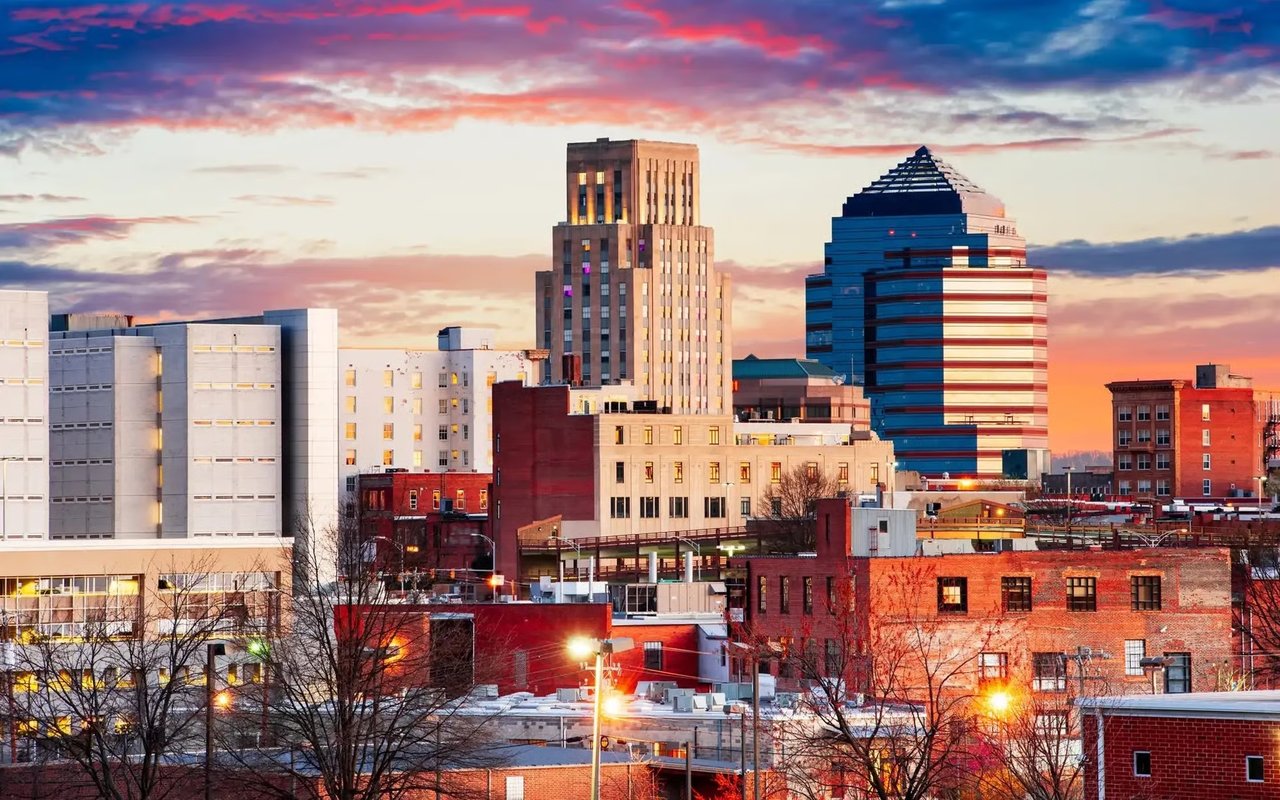
Durham has undergone one of the most remarkable urban transformations of any American city in the past 25 years. Once defined by tobacco manufacturing and the presence of Duke University, Durham has reinvented itself into a nationally celebrated destination for food, art, entrepreneurship, and progressive urban living. It is regularly named among the most interesting cities in America — not just in the South — and its evolution shows no sign of slowing.
Duke University and Duke University Health System anchor Durham's economy, drawing world-class physicians, researchers, and professionals who form the backbone of one of the Triangle's most educated populations. Beyond Duke, a thriving startup ecosystem anchored by the American Underground accelerator network and proximity to Research Triangle Park create an economic environment that rewards talent across disciplines.
Durham's most sought-after neighborhoods include Trinity Park, Watts-Hillandale, Old West Durham, and Forest Hills — walkable historic communities with mature trees and strong identity. Downtown Durham has been transformed by loft conversions in former tobacco warehouses and new residential towers. Hope Valley, Woodcroft, and communities near Southpoint offer newer construction and family-focused amenities for buyers who want suburban comfort with urban access.
Mateo — Acclaimed Spanish tapas in downtown Durham
Counting House at 21c Museum Hotel — Hotel dining at its finest
Saltbox Seafood Joint — James Beard-nominated coastal fare
Pizzeria Toro — Wood-fired pizza institution beloved by locals
Fullsteam Brewery — Southern-ingredient craft beer and community hub
DPAC (Durham Performing Arts Center) — Consistently ranked top 10 nationally for mid-size venues
American Tobacco Campus — Iconic redevelopment anchoring downtown
Nasher Museum of Art at Duke — World-class collection open to the public
Durham Bulls Athletic Park — Home of the famous AAA baseball team
Q: Is Durham a good place to live?
A: Absolutely. Durham has one of the most distinctive identities of any mid-size American city — creative, progressive, food-obsessed, and proud of its heritage. It offers a lower cost of living than Raleigh and Chapel Hill while delivering exceptional cultural amenities, a strong job market anchored by Duke, and some of the Triangle's most walkable, character-rich neighborhoods.
Q: What is the average home price in Durham, NC?
A: As of early 2026, median home prices in Durham hover in the low-to-mid $400,000s, though prices vary significantly by neighborhood. Historic in-town neighborhoods near Duke can exceed $600,000–$800,000, while more suburban areas offer options in the $300,000s. The market has stabilized after rapid appreciation between 2019 and 2023.
Q: What are the best neighborhoods in Durham?
A: Trinity Park, Watts-Hillandale, Old West Durham, and Forest Hills are consistently the most sought-after neighborhoods for their walkability, historic homes, and community character. Downtown Durham's converted tobacco warehouse lofts appeal to urban professionals. Hope Valley and Woodcroft offer family-oriented suburban living at more accessible price points.
Q: How far is Durham from Raleigh?
A: Durham is approximately 25–30 minutes from downtown Raleigh via I-40 in normal traffic. The two cities share the broader Research Triangle metro and are closely connected economically and culturally.
Q: What is Durham known for?
A: Durham is known for Duke University, one of the nation's top research universities; one of the best food scenes in the South; DPAC, a nationally ranked performing arts venue; the transformed American Tobacco Campus; a thriving craft brewery scene; and a creative, progressive community culture that has attracted national recognition.
Explore the area
288,465 people live in Durham, where the median age is 34.8 and the average individual income is $47,246. Data provided by the U.S. Census Bureau.
Total Population
Median Age
Population Density
Average individual Income
There's plenty to do around Durham, including shopping, dining, nightlife, parks, and more. Data provided by Walk Score and Yelp.
Explore popular things to do in the area, including Afrikikos Bistro, Happy Times Food Truck, and Hill's Open Air Market.
| Name | Category | Distance | Reviews |
Ratings by
Yelp
|
|---|---|---|---|---|
| Dining | 0.12 miles | 0 reviews | 0/5 stars | |
| Dining | 0.31 miles | 0 reviews | 0/5 stars | |
| Dining | 0.38 miles | 0 reviews | 0/5 stars | |
| Dining | 0.41 miles | 0 reviews | 0/5 stars | |
| Dining | 0.44 miles | 0 reviews | 0/5 stars | |
| Dining | 0.48 miles | 0 reviews | 0/5 stars | |
| Dining | 0.58 miles | 0 reviews | 0/5 stars | |
| Dining | 0.61 miles | 0 reviews | 0/5 stars | |
| Dining | 0.61 miles | 0 reviews | 0/5 stars | |
| Shopping | 0.51 miles | 0 reviews | 0/5 stars | |
| Active | 0.34 miles | 0 reviews | 0/5 stars | |
| Active | 0.4 miles | 0 reviews | 0/5 stars | |
| Active | 0.55 miles | 0 reviews | 0/5 stars | |
| Beauty | 0.18 miles | 0 reviews | 0/5 stars | |
| Beauty | 0.27 miles | 0 reviews | 0/5 stars | |
| Beauty | 0.28 miles | 0 reviews | 0/5 stars | |
| Beauty | 0.28 miles | 0 reviews | 0/5 stars | |
| Beauty | 0.39 miles | 0 reviews | 0/5 stars | |
| Beauty | 0.45 miles | 1 review | 5/5 stars | |
| Beauty | 0.49 miles | 0 reviews | 0/5 stars | |
| Beauty | 0.49 miles | 0 reviews | 0/5 stars | |
| Beauty | 0.53 miles | 0 reviews | 0/5 stars | |
| Beauty | 0.64 miles | 0 reviews | 0/5 stars | |
| Beauty | 0.65 miles | 0 reviews | 0/5 stars | |
|
|
||||
|
|
||||
|
|
||||
|
|
||||
|
|
||||
|
|
Durham has 123,318 households, with an average household size of 2.25. Data provided by the U.S. Census Bureau. Here’s what the people living in Durham do for work — and how long it takes them to get there. Data provided by the U.S. Census Bureau. 288,465 people call Durham home. The population density is 2,471 and the largest age group is Data provided by the U.S. Census Bureau.
Total Population
Population Density Population Density This is the number of people per square mile in a neighborhood.
Median Age
Men vs Women
Population by Age Group
0-9 Years
10-17 Years
18-24 Years
25-64 Years
65-74 Years
75+ Years
Education Level
Total Households
Average Household Size
Average individual Income
Households with Children
With Children:
Without Children:
Blue vs White Collar Workers
Blue Collar:
White Collar: