Buy With Us
Explore Raleigh
Success Stories
Median Home Price (2026): ~$420,000 (Redfin, March 2026)
Avg. Days on Market: 43 days
Population: 480,000+ (city); 1.4M+ (metro)
County: Wake County
School District: Wake County Public Schools (WCPSS)
Airport: Raleigh-Durham International (RDU) — 15 min from downtown
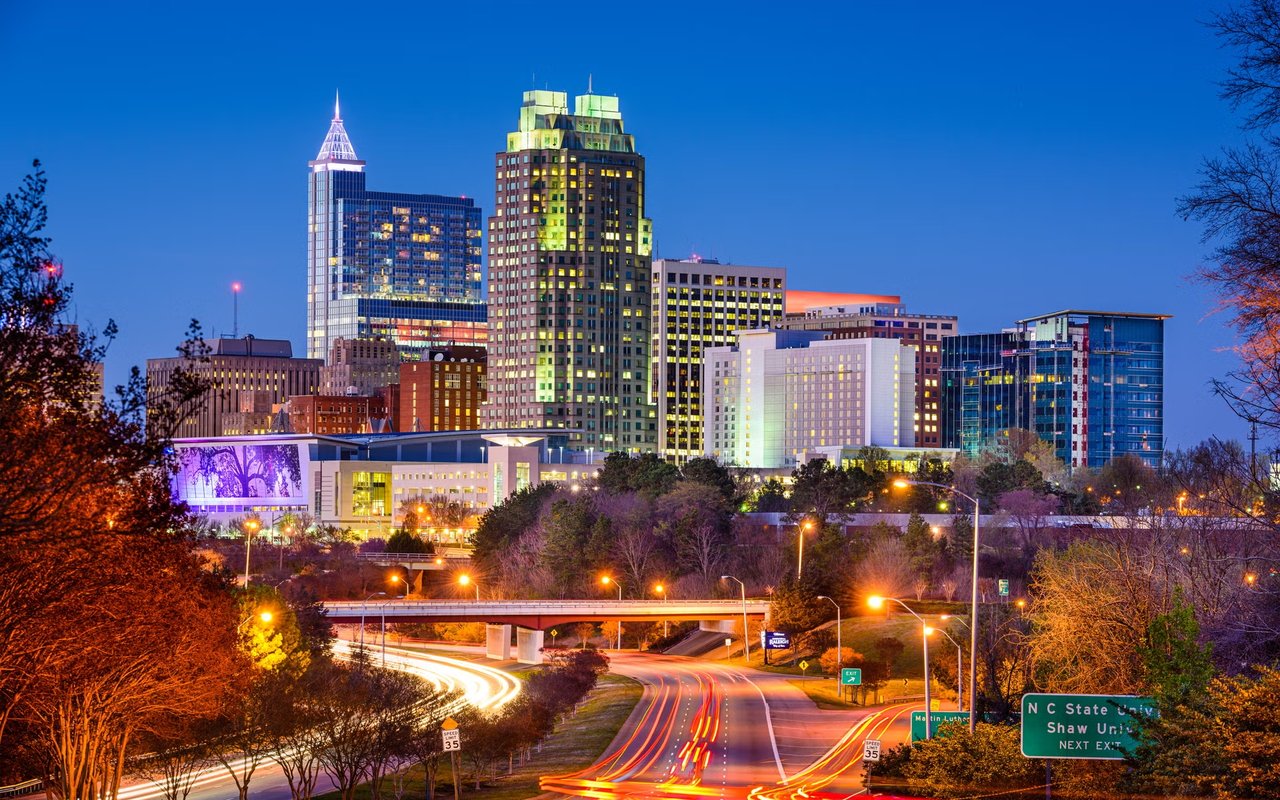
Raleigh is one of the fastest-growing and most celebrated cities in the United States — and the numbers back it up. As North Carolina's state capital and the eastern anchor of the Research Triangle, Raleigh has evolved from a government town into a nationally recognized hub for technology, life sciences, education, and culture. The city consistently ranks among the best places to live, work, and raise a family in national publications, and the ranking reflects real daily experience — excellent schools, a diversified economy, a thriving dining and arts scene, and a cost of living that remains meaningfully lower than comparable East Coast cities.
What sets Raleigh apart from other fast-growing Sun Belt cities is the depth and diversification of its economic foundation. The Research Triangle Park (RTP), located between Raleigh, Durham, and Chapel Hill, is one of the largest research parks in the world, home to global companies including IBM, Cisco, Biogen, and Lenovo. Within Raleigh itself, major employers include Red Hat, SAS Institute, Bandwidth, WakeMed Health, and the North Carolina state government, creating an employment base resilient enough to weather national economic cycles and attractive enough to draw new employers every year.
Raleigh's neighborhoods span an extraordinary range of character and price point. Downtown Raleigh is a walkable, 18-hour neighborhood dense with condos, restaurants, nightlife, and arts institutions. Inside the Beltline — the historic neighborhoods enclosed by I-440 — includes Hayes Barton, Cameron Village, Five Points, Boylan Heights, and Mordecai, each with distinct architectural character. North Hills (Midtown) is the city's premier live-work-play district. The Village District combines boutique retail with some of the city's most charming residential streets. North Raleigh offers newer construction, larger lots, and some of Wake County's highest-rated schools.
Wake County Public Schools (WCPSS) serves over 160,000 students and is one of the most respected districts in the Southeast. The district operates numerous magnet programs with specialized tracks in STEM, arts, IB, and Montessori. NC State University, located in the heart of Raleigh, is a top-tier research institution and an enormous contributor to the city's economy, culture, and talent pipeline.
The NC Museum of Art, NC Museum of Natural Sciences (the largest natural history museum in the Southeast), and the Duke Energy Center for the Performing Arts give Raleigh world-class cultural infrastructure. Glenwood South and the Warehouse District are Raleigh's primary dining and nightlife corridors, anchoring a food scene that has earned national recognition — James Beard nominations, Food & Wine features, and a craft beverage scene that now spans dozens of breweries, cideries, and distilleries.
Bida Manda — Award-winning Laotian cuisine in downtown Raleigh
Crawford and Son — Chef-driven New American on Person Street
Vidrio — Acclaimed Mediterranean in the heart of Glenwood South
Brewery Bhavana — James Beard-nominated dim sum, bookstore & brewery
The Pit — Whole-hog barbecue in the Warehouse District
Dix Park — 308 acres in development as Raleigh's answer to Central Park
Shelley Lake — 53-acre lake with paved perimeter trail in North Raleigh
William B. Umstead State Park — 5,600 acres of forest minutes from downtown
Neuse River Greenway — 30+ paved miles along the Neuse River corridor
Q: Is Raleigh a good place to live?
A: Yes — Raleigh consistently ranks among the top cities in the country for quality of life. Strong schools, a growing job market, mild weather, extensive greenways, and a cost of living well below comparable Northeast and West Coast cities make it genuinely compelling for families, professionals, and retirees alike.
Q: What is the average home price in Raleigh, NC?
A: As of early 2026, the median home sale price in Raleigh is approximately $420,000, with an average home value around $431,000 according to Zillow. Prices range from condos in the mid-$200,000s downtown to luxury estates exceeding $2 million in premium neighborhoods.
Q: What are the best neighborhoods in Raleigh?
A: The most sought-after neighborhoods in Raleigh include Hayes Barton, Five Points, and Boylan Heights inside the Beltline; North Hills (Midtown) for urban walkability; the Village District for in-town charm; and North Raleigh communities like Bridgeport and Wakefield Plantation for families seeking newer construction and top-rated schools.
Q: How are the schools in Raleigh, NC?
A: Wake County Public Schools is one of the largest and most respected districts in the Southeast, serving over 160,000 students. The district operates numerous magnet and specialized programs. Multiple Raleigh-area high schools consistently rank among the best in North Carolina.
Q: Is Raleigh affordable?
A: Relative to comparable cities on the East Coast, yes. Raleigh's median home price of ~$420,000 is significantly below Boston, Washington D.C., New York, or even Charlotte, while offering comparable amenities and a stronger job market in key sectors. However, the market has appreciated substantially over the past decade and is no longer the bargain it was in 2015.
Q: What is there to do in Raleigh?
A: Raleigh offers a remarkable breadth of activities: world-class museums (NC Museum of Art, NC Museum of Natural Sciences), a thriving restaurant scene, 130+ miles of paved greenways, major concert venues (Red Hat Amphitheater, PNC Arena), Hopscotch Music Festival, Artsplosure, NC State athletics, and a growing arts district centered on downtown and the Warehouse District.
Explore the area
558,533 people live in Raleigh, where the median age is 36.5 and the average individual income is $52,300. Data provided by the U.S. Census Bureau.
Total Population
Median Age
Population Density
Average individual Income
There's plenty to do around Raleigh, including shopping, dining, nightlife, parks, and more. Data provided by Walk Score and Yelp.
Explore popular things to do in the area, including Fisher's Food Mart, Unique Batik, and Creekside Crossing Shopping Center.
| Name | Category | Distance | Reviews |
Ratings by
Yelp
|
|---|---|---|---|---|
| Dining | 1.06 miles | 0 reviews | 0/5 stars | |
| Shopping | 0.69 miles | 1 review | 5/5 stars | |
| Shopping | 0.97 miles | 1 review | 4/5 stars | |
| Shopping | 1.13 miles | 0 reviews | 0/5 stars | |
| Active | 0.44 miles | 0 reviews | 0/5 stars | |
| Active | 0.68 miles | 5 reviews | 4.8/5 stars | |
| Active | 1.02 miles | 0 reviews | 0/5 stars | |
| Nightlife | 0.81 miles | 0 reviews | 0/5 stars | |
| Beauty | 0.52 miles | 0 reviews | 0/5 stars | |
| Beauty | 0.52 miles | 9 reviews | 3.2/5 stars | |
| Beauty | 0.52 miles | 0 reviews | 0/5 stars | |
| Beauty | 0.52 miles | 0 reviews | 0/5 stars | |
| Beauty | 0.67 miles | 0 reviews | 0/5 stars | |
| Beauty | 0.9 miles | 0 reviews | 0/5 stars | |
| Beauty | 0.9 miles | 0 reviews | 0/5 stars | |
| Beauty | 0.9 miles | 0 reviews | 0/5 stars | |
| Beauty | 0.9 miles | 0 reviews | 0/5 stars | |
| Beauty | 0.91 miles | 0 reviews | 0/5 stars | |
| Beauty | 0.91 miles | 0 reviews | 0/5 stars | |
| Beauty | 0.91 miles | 0 reviews | 0/5 stars | |
| Beauty | 0.97 miles | 0 reviews | 0/5 stars | |
| Beauty | 0.97 miles | 0 reviews | 0/5 stars | |
| Beauty | 1.23 miles | 0 reviews | 0/5 stars | |
| Beauty | 1.25 miles | 0 reviews | 0/5 stars | |
|
|
||||
|
|
||||
|
|
||||
|
|
||||
|
|
||||
|
|
Raleigh has 230,532 households, with an average household size of 2.247333333333333. Data provided by the U.S. Census Bureau. Here’s what the people living in Raleigh do for work — and how long it takes them to get there. Data provided by the U.S. Census Bureau. 558,533 people call Raleigh home. The population density is 2,175 and the largest age group is Data provided by the U.S. Census Bureau.
Total Population
Population Density Population Density This is the number of people per square mile in a neighborhood.
Median Age
Men vs Women
Population by Age Group
0-9 Years
10-17 Years
18-24 Years
25-64 Years
65-74 Years
75+ Years
Education Level
Total Households
Average Household Size
Average individual Income
Households with Children
With Children:
Without Children:
Blue vs White Collar Workers
Blue Collar:
White Collar: