
Key Takeaways
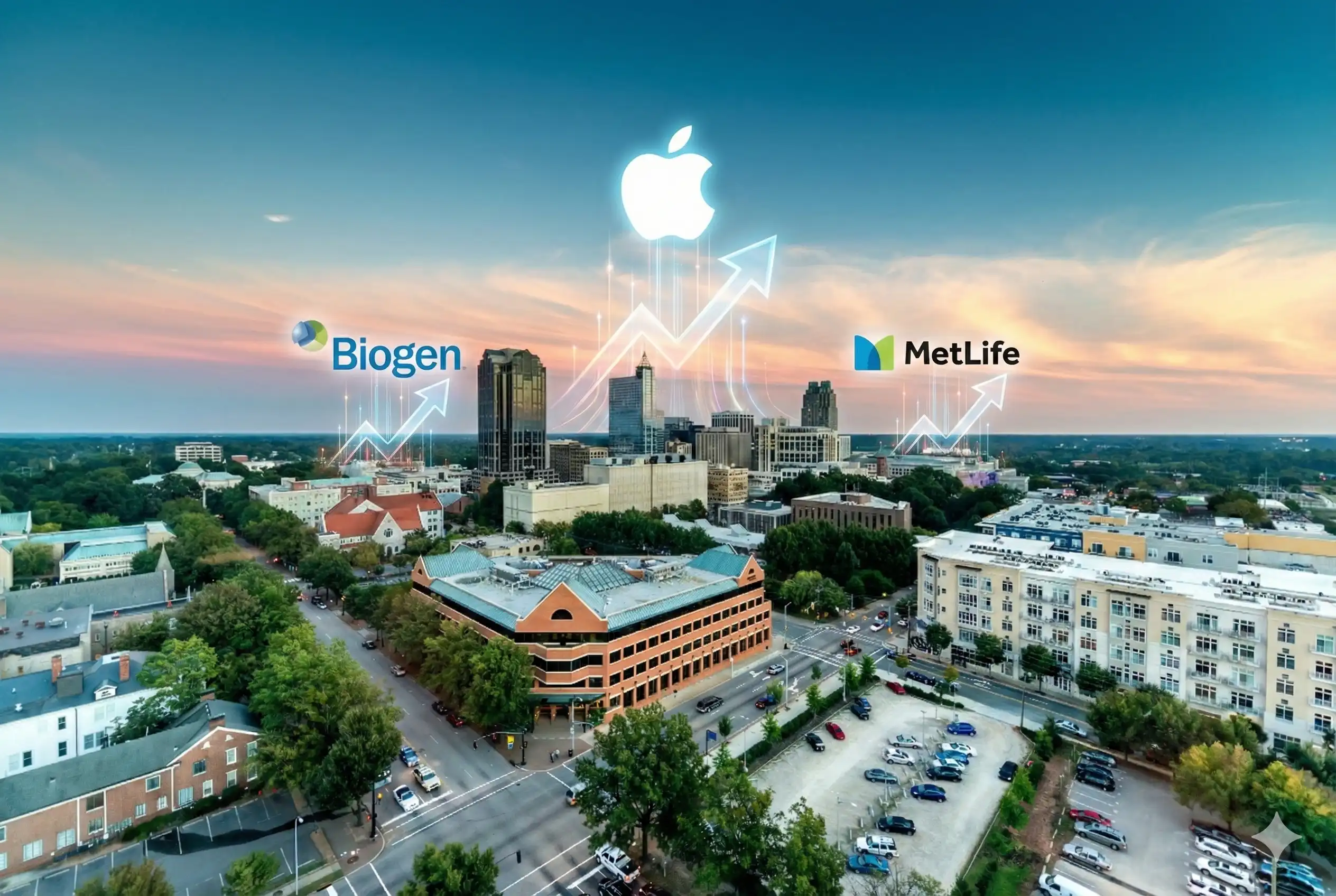
- Major corporations such as Apple, Biogen, and MetLife have expanded operations in Raleigh, bringing thousands of high-paying jobs and driving substantial economic growth.
- The arrival of tech and financial firms has pushed median home prices up significantly since 2020 and continued moderate appreciation is expected.
- Raleigh’s strategic location in the Research Triangle, combined with world-class universities and favorable business climate, creates an unmatched environment for corporate relocation and talent retention.
- New headquarters and major expansions continue to drive job creation, though some projects like Apple’s campus have experienced timeline extensions.
- The city’s cost advantages compared to traditional tech hubs continue attracting both businesses and employees, though rapid growth is testing infrastructure and affordability limits.
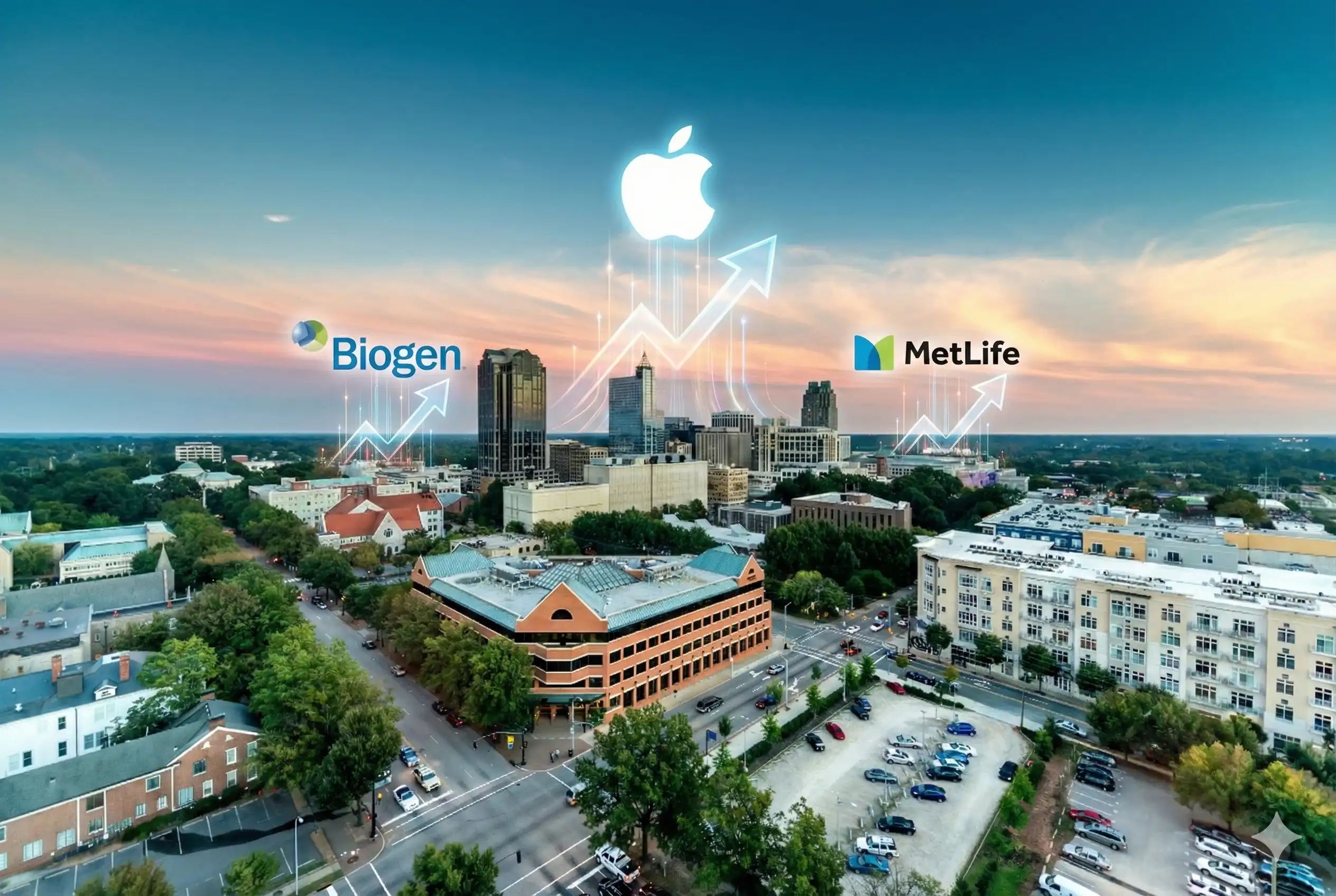
When Apple announced its $1 billion campus investment in Raleigh in April 2021, the news made national headlines. More importantly, it signaled a broader shift in where major companies choose to grow. This massive investment, promising 3,000 high-paying engineering jobs, represents just one piece of a larger puzzle transforming North Carolina’s capital into a major business destination.
Apple’s move is part of a larger pattern. As traditional tech centers like San Francisco and Seattle grapple with rising costs and regulatory challenges, Raleigh offers a compelling alternative that combines world-class talent, favorable policies, and genuine quality of life advantages.
This transformation carries profound implications for the local housing market. When thousands of well-paid professionals relocate to any city, home prices respond accordingly. In Raleigh’s case, the response has been dramatic and the market continues to evolve.
Recent Major Corporate Relocations and Expansions
Corporate investment in Raleigh has accelerated dramatically in recent years, with several high-profile announcements reshaping the region’s economic landscape.
Apple’s $1 billion campus expansion remains the most visible example. Announced in April 2021, the company chose Raleigh’s Research Triangle Park for its new engineering and software hub focused on machine learning, artificial intelligence, and software development. In November 2025, North Carolina’s Economic Investment Committee approved a four-year timeline extension for the project, effectively making 2027 “year one” for the state’s incentive requirements. While campus construction has not yet begun, Apple has added around 600 positions in the Raleigh area since 2021 and currently employs approximately 1,630 people across the state, reinforcing its long-term commitment to the region.
MetLife’s Global Technology Campus in Cary represents another major investment. Announced in 2013 and opened in 2015, the campus now employs approximately 2,600 individuals in a state-of-the-art facility overlooking Lake Crabtree. The insurance leader’s investment in Raleigh demonstrates how the city attracts diverse industries beyond just tech companies, creating a more resilient economic base. MetLife continues to expand its hiring in critical areas including software engineering, data science, and cybersecurity.
Pendo offers an example of local success reinforcing the area’s momentum. Founded in the Triangle, the software company reached unicorn status with a $1 billion valuation in 2019, and reached a valuation of $2.6 billion following its 2021 Series F funding round. Pendo moved into a new downtown Raleigh headquarters in early 2022 and has since achieved $200 million in annual recurring revenue and its first quarter of positive cash generation, demonstrating how the region supports companies from startup to enterprise scale.
Other major employers, including Red Hat and Cisco, continue to grow their Raleigh-area teams, particularly in cloud computing, networking, and security.
Pharmaceutical and biotechnology companies have also discovered Raleigh’s advantages. Biogen, which has operated in Research Triangle Park for 30 years, announced in July 2025 a $2 billion investment to expand its manufacturing capabilities. The company has invested approximately $10 billion in its North Carolina manufacturing footprint to date and currently employs more than 1,500 workers and 400 contractors at its Triangle campuses, which include seven manufacturing facilities with an eighth under construction. These expansions demonstrate how Raleigh business development initiatives successfully attract diverse industries while building on existing strengths.
Key Factors Driving Corporate Relocation to Raleigh
Research Triangle Advantage
The Research Triangle’s unique geography creates unparalleled advantages for corporate recruitment and talent development. NC State University, Duke University, and UNC Chapel Hill are located within roughly 30 miles of one another, producing a steady pipeline of graduates in engineering, technology, life sciences, and business.
Research Triangle Park spans 7,000 acres and houses more than 300 companies employing over 55,000 full-time workers plus an additional 10,000 contractors. Combined annual research spending from companies and universities totals approximately $6 billion. This concentration creates powerful networking effects, allowing companies to collaborate, recruit efficiently, and reduce research and development costs.
Close partnerships between corporations and universities provide access to specialized facilities, cutting-edge research, and top-tier talent, advantages that few markets can match.
Business Climate and Incentives
North Carolina offers one of the most competitive tax environments in the country. As of January 2025, the state’s corporate income tax rate is 2.25%—the lowest corporate income tax rate in the nation among states that collect corporate income taxes. This compares favorably to California’s 8.84% and New York’s 6.5%–7.25%. Furthermore, North Carolina is phasing out the corporate income tax entirely, with the rate dropping to 2% in 2026 and reaching 0% by 2030, making it one of only a handful of states without this tax.
Wake County and state-level programs such as Job Development Investment Grants provide performance-based grants that can cover a significant portion of withholding taxes for new employees earning above county averages. The program has attracted major employers by reducing effective labor costs while ensuring benefits flow only to companies meeting their expansion commitments.
Infrastructure investments further support growth, including broadband expansion, transportation improvements, and transit initiatives that connect employment centers throughout the triangle.
Quality of Life and Cost Advantages
Salary comparisons reveal Raleigh’s compelling value proposition for both companies and employees. While tech salaries in Raleigh are typically lower than in San Francisco or Seattle, when adjusted for cost of living differences, Raleigh professionals often enjoy higher purchasing power and better overall financial outcomes. Housing affordability ratios show Raleigh homes cost significantly less than comparable properties in West Coast markets.
Cultural amenities and recreational opportunities enhance the region’s appeal for recruiting top performers. The area offers professional sports teams, world-class dining, and outdoor recreation ranging from mountains to beaches within driving distance. These quality of life factors help companies attract talent that might otherwise prefer larger metropolitan areas.
Impact on Raleigh Housing Market
Current Market Conditions
The influx of high-paying corporate jobs has fundamentally altered Raleigh’s housing dynamics. Since the beginning of the pandemic in 2020, home values in Raleigh have seen substantial appreciation, though the market has stabilized significantly from peak levels. The median home price hovered near $230,000 in 2014; today, the median sale price is approximately $450,000 according to current market data. While growth has moderated from the rapid appreciation of 2021–2022, current year-over-year increases remain in the low single digits.
Market conditions have improved for buyers compared to the peak frenzy of 2021 and 2022. Homes are taking longer to sell—currently averaging around 45–55 days on market—giving buyers more negotiating power than in recent years. Homes are generally selling for about 2% below list price.
The rental market has experienced similar dynamics, with rents having increased significantly since 2021. Apartment construction has accelerated in response to demand, with thousands of units under development in downtown Raleigh and surrounding areas.
Geographic Hotspots and Price Variations
North Hills has become a focal point for price growth due to its proximity to major employers and walkable amenities. Downtown Raleigh continues to see strong condominium demand, especially for new luxury developments.
Emerging areas like East Raleigh and Garner are attracting buyers seeking affordability and reasonable commutes. These neighborhoods offer larger lots and newer construction at lower price points.
Suburban markets in Cary, Apex, and Wake Forest continue seeing strong demand from corporate relocations. These communities offer excellent schools and family-friendly environments that appeal to mid-career professionals relocating with children.
Future Projections and Market Outlook
Forecasts suggest continued price stability with moderate appreciation supported by job growth and corporate expansion. Analysts project modest price increases of approximately 3% in 2025 and 4% in 2026, representing a much more stable growth rate than the rapid gains seen in previous years.
Ongoing investments, including Biogen’s July 2025 expansion announcement and the eventual development of Apple’s campus, will continue adding jobs. Infrastructure projects such as airport expansions and zoning changes to support higher-density housing will shape future growth.
Potential risks include broader economic downturns and interest rate changes, though Raleigh’s diversified economy provides a degree of insulation compared to less balanced markets.
Investment Opportunities and Considerations
Emerging neighborhoods near major employment centers may offer long-term value for buyers who understand development trends. Areas within convenient commuting distance of major employers but not yet fully discovered may offer value for buyers willing to research development patterns and infrastructure plans.
Build-to-rent developments targeting high-earning corporate employees have gained popularity among investors. These purpose-built rental communities offer amenities and services that appeal to professionals who prefer flexibility over homeownership.
Timing considerations vary significantly based on investment strategy and risk tolerance. First-time homebuyers benefit from building equity in a market with strong fundamentals. The region’s diversified economy, continued infrastructure investment, and ongoing corporate interest support long-term value.
Whether you’re relocating for a new job, investing in rental properties, or simply exploring your options, understanding these market dynamics gives you a significant advantage. The companies betting big on Raleigh are playing a long game, and the data suggests that’s a smart play.
Ready to explore your options in the Triangle? The Coley Group has helped hundreds of buyers and sellers navigate this dynamic market. With over 25 years of local expertise and $2 billion in career sales, we’ll help you find your place in one of America’s most exciting real estate markets.
Frequently Asked Questions
What is driving the highest home price increases in specific Raleigh neighborhoods?
Proximity to corporate campuses, infrastructure upgrades, and new retail development all contribute to stronger price growth. Additionally, neighborhoods receiving infrastructure improvements or new retail developments see accelerated growth as quality of life improvements make areas more desirable.
How does Raleigh’s corporate growth compare to other secondary cities like Austin or Nashville?
Raleigh’s unique advantages center on Research Triangle Park’s concentration of research and development activities, creating high-value jobs and sustainable growth across diverse sectors. While Austin faces increasing congestion and cost pressures, and Nashville relies heavily on tourism and entertainment, Raleigh maintains competitive costs while achieving strong corporate attraction success across technology, life sciences, and financial services.
Will the housing market reach a saturation point where companies stop relocating to Raleigh?
Current housing supply pipelines show significant new construction planned, which should help moderate price growth while maintaining corporate appeal. Companies factor housing costs into relocation decisions, but Raleigh’s housing remains significantly more affordable than traditional tech centers, providing a substantial buffer. The Research Triangle’s land availability and zoning flexibility allow for sustainable expansion that many competing markets cannot match.
What impact will remote work trends have on Raleigh’s corporate relocation appeal?
Hybrid work models may actually increase Raleigh’s appeal as companies maintain operations while accessing quality talent attracted to the area’s quality of life advantages. Quality of life factors become more important when employees have location flexibility, and Raleigh’s combination of cultural amenities, outdoor recreation, and reasonable costs positions it well for evolving workplace trends.
Are there any signs that home price growth in Raleigh might slow down?
Construction activity and increasing inventory suggest the market has found better balance compared to the peak frenzy of 2021 and 2022. However, continued corporate expansion and job creation suggest demand will remain solid. Interest rates and national economic conditions could provide moderating factors, but Raleigh’s diversified economy provides stability. The most likely scenario involves continued moderate appreciation at sustainable rates rather than the rapid gains seen during peak periods.
What is the status of Apple’s Raleigh campus?
As of November 2025, North Carolina granted Apple a four-year extension on its campus development timeline, effectively making 2027 “year one” for the state’s incentive requirements. While physical construction has not yet begun, Apple continues to lease office space in the area and has added approximately 600 positions since the 2021 announcement. The company currently employs about 1,630 people across North Carolina and remains committed to the region’s long-term development.

Social Cookies
Social Cookies are used to enable you to share pages and content you find interesting throughout the website through third-party social networking or other websites (including, potentially for advertising purposes related to social networking).