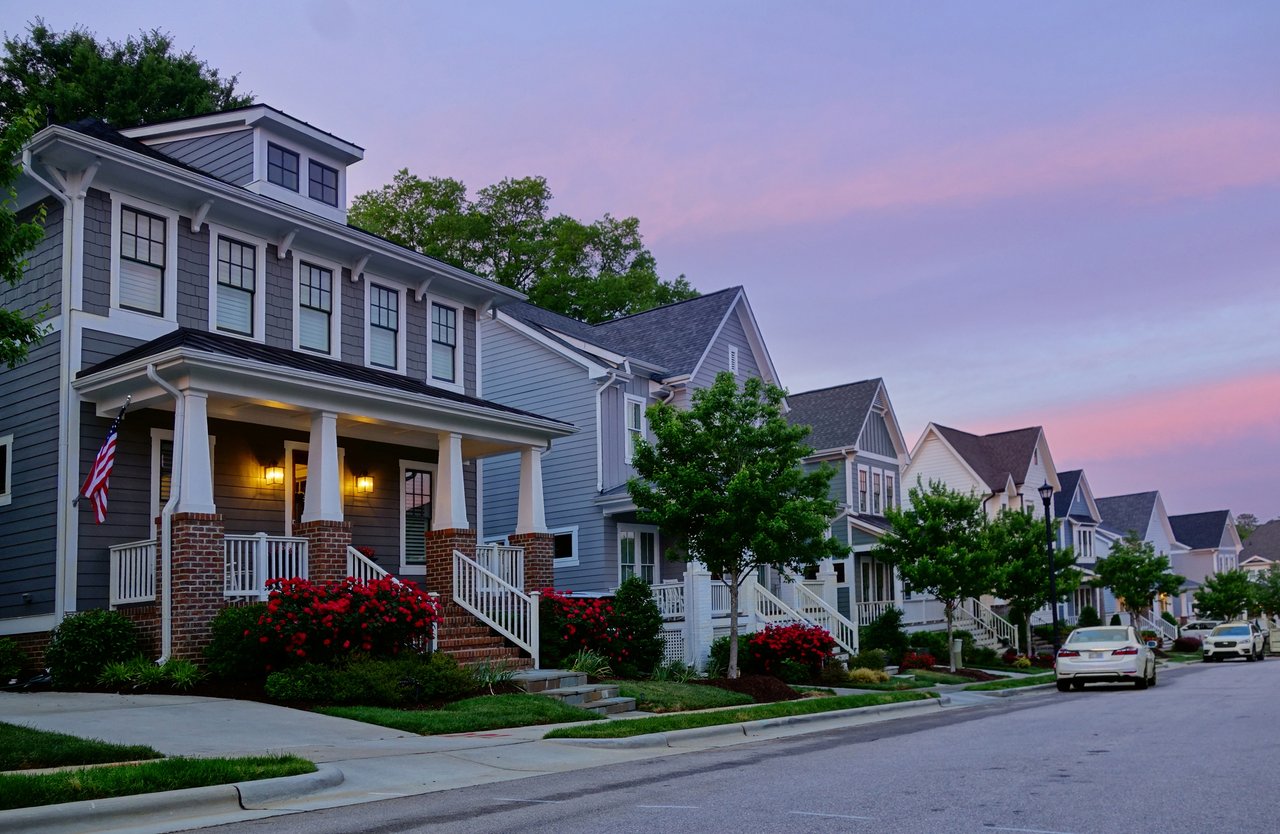
Raleigh's real estate market entered fall 2026 in a different position than it held twelve months ago. Median sale prices have pulled back, price reductions are more common, and the 30-year fixed rate closed September 17 at 6.95%. For buyers, that combination is creating real opportunity. For sellers, it is creating a new set of decisions that reward preparation and honest pricing over optimism.
Here is what the data shows, what it means, and what we are advising clients to do with it.
What is happening with home prices in Raleigh right now?
The median sale price in Raleigh is running near $422,000 as of late September 2026, which represents a decline of approximately 6.2% from the same period a year ago. That number matters in both directions.
For sellers, it means the ceiling you may have mentally set based on a neighbor's sale in 2024 or early 2025 is no longer the benchmark. Pricing to that ceiling today produces the exact outcome sellers most want to avoid: a listing that sits, reduces, and eventually closes below what a well-priced home would have commanded on day one.
For buyers, a 6.2% price correction on a $422,000 median represents real dollars back in your pocket. The market is giving you something it was not giving anyone eighteen months ago: negotiating room and time to think.
The shift is real. It is not a crash. And it rewards different behavior from both sides.
Why are price reductions increasing across the Triangle?
Price reductions are rising because a portion of sellers entered the market at prices the current buyer pool cannot support. The logic behind those prices is understandable: sellers saw what homes fetched in 2023 and 2024, assumed the trajectory would hold, and listed accordingly.
What the data is revealing is that buyer purchasing power has been reshaped by rates. At 6.95% on a 30-year fixed, the monthly payment on a $422,000 home looks meaningfully different than it did when rates were in the fives. Buyers are doing the math, and the math is telling them to walk away from homes that are priced as though rates never moved.
The sellers who are succeeding are the ones who priced to create competition, not to leave room to negotiate. We have seen this pattern across 25 years and more than 3,000 homes in the Triangle: the first two weeks of a listing are the only window you get. Price right from day one, and buyers compete. Price high, and they wait, or they walk.
One of our case studies captures this precisely. A seller who priced above our recommendation to leave negotiating room received very few showings, reduced twice, ended up below our original number, and then accepted an offer lower still. That pricing decision cost roughly $25,000 in equity. The market in fall 2026 does not forgive that mistake any more generously than it did then.
Should buyers wait for mortgage rates to drop?
This is the question we hear most often right now, and here is the answer: waiting for rates is a strategy with a cost that most buyers underestimate, and it can price you out of neighborhoods entirely.
When rates drop into the 5s, every buyer who has been sitting on the sidelines re-enters the market at the same moment. Inventory that feels manageable today tightens quickly, and the negotiating room buyers currently have closes just as fast. The buyer who waited for a better rate often ends up paying a higher price in a multiple-offer situation, which eliminates the savings they were waiting for.
The buyers who build wealth in this market are the ones who buy when others hesitate, then refinance when rates move. The house you buy today at $422,000 with negotiating room is a different asset than the house you compete for at $460,000 when rates fall and every other buyer shows up at the same time.
Dan bought a four-bedroom home in a Raleigh suburb in 2019. Not a dream home. A house. He paid one extra mortgage payment a year toward principal. When he sold in 2025, it had appreciated 40 percent and he walked away with $370,000, tax free. That equity bought a home he never thought he could afford. The decision that made it possible was buying when the moment was right, not when the conditions were perfect.
What does fall 2026 mean for sellers specifically?
Sellers who are preparing to list in Q4 need to enter the market with clear eyes about three things.
First, pricing. The market will tell you what your home is worth faster than any wishful number will. A home priced correctly for fall 2026 conditions will move. A home priced for 2024 conditions will sit, and sitting costs more than most sellers calculate: carrying costs, price reductions, and the psychological toll of a stale listing.
Second, preparation. The buyers who are active right now are discerning. They have more options than they did a year ago, and they are comparing your home against everything else available. Presentation matters more in a normalized market than it ever did in a frenzy.
Third, timing. Q4 is not a dead season in Raleigh. Serious buyers are active in October and November, often under deadline pressure from job relocations, lease expirations, or school calendars. A well-prepared home entering the market in October can find a motivated buyer who has fewer competing homes to consider.
Through Compass Concierge, sellers can front the cost of pre-sale improvements with no upfront payment, which means the home arrives on market at its best without requiring sellers to write a check before closing. That tool exists specifically for this moment.
Is Raleigh still a good market to buy into long-term?
Yes. The Triangle's fundamentals have not changed. Raleigh continues to attract employers, residents, and capital from markets across the country. The population growth that drove the 2021 to 2024 run-up did not reverse. What changed is the pace, and pace corrections are healthy.
One in five homes in Raleigh sells before it ever reaches the public market. That number is not a marketing claim. It is a structural feature of this market, and it means the buyers with access to Compass Private Exclusives and our private seller database of more than 30,000 contacts are seeing inventory that never appears on the MLS. In a market where publicly listed homes are taking longer to move, off-market access is not a bonus. It is a genuine advantage.
The buyers who will look back on fall 2026 as the right time to have moved are the ones who understood that the combination of a price correction, negotiating room, and less competition from other buyers is exactly the environment that builds long-term wealth. It does not feel like that in the moment. It rarely does.
What should you do next?
If you are a seller, the first step is an honest conversation about what your home is worth in this market, not the market of eighteen months ago. Our home valuation process starts there, and it is built on what is actually closing in your neighborhood right now.
If you are a buyer, the first step is understanding what you can access. The MLS is one inventory pool. The off-market listings we reach through Compass and our private network are another. Buyers who only search publicly listed homes are working with a fraction of the available picture.
For buyers choosing where to land in the Triangle, our Neighborhood Match process answers the questions a listing page cannot. Cary, Apex, Holly Springs, Wake Forest, Inside the Beltline, and North Hills each live differently, and price per square foot will not tell you which one fits the life you are building.
For the buyers and sellers who are ready, we bring 25 years in this market, more than 3,000 homes sold, and a process that is defined before it starts. You will always know what happens next and what happens after that. Our clients go under contract in an average of 29 days, against a regional average of 54.
The market has shifted. The opportunity is real. The question is whether you are positioned to act on it.
Search active listings in Raleigh or schedule a call with our team whenever you are ready to talk through your specific situation.
Frequently Asked Questions About the Raleigh NC Real Estate Market in Fall 2026
Is now a good time to buy a home in Raleigh, NC?
Fall 2026 offers buyers a combination that has been rare in recent years: a price correction near 6% year over year, more negotiating room, and less competition from other buyers. Rates at 6.95% are a factor, but buyers who wait for lower rates often face higher prices and multiple-offer situations when rates do move.
What is the median home price in Raleigh in fall 2026?
The median sale price in Raleigh is running near $422,000 as of late September 2026, down approximately 6.2% from the same period a year ago. Confirm current figures with a TCG advisor or through Triangle MLS data before making pricing decisions.
Why are so many Raleigh homes reducing their prices?
Price reductions are rising because a segment of sellers listed at prices set during the 2023 to 2024 peak, before rates moved to their current level. At 6.95% on a 30-year fixed, the monthly payment math has changed, and buyers are responding by passing on overpriced homes rather than offering on them.
What are mortgage rates in Raleigh right now?
The 30-year fixed rate hit 6.95% on September 17, 2026. Rates move daily. For current figures and financing options specific to your situation, connect with a lender through our network, including CrossCountry Mortgage or Fairway Mortgage.
Is Raleigh real estate still a good long-term investment?
The Triangle's population growth, employer base, and infrastructure investment have not reversed. Short-term price corrections are a normal part of any healthy market cycle. Buyers who purchase during a correction and hold for five or more years have historically built significant equity in this region.
How do I find off-market homes in Raleigh?
Through the Compass Private Exclusives program and our private seller database of more than 30,000 contacts, The Coley Group provides access to homes before they reach the MLS. Roughly one in five homes in Raleigh sells off-market. See current off-market listings or contact our team directly.
Should I sell my Raleigh home in fall 2026 or wait until spring?
Serious buyers are active in Q4, often motivated by relocations, lease expirations, or school-year timelines. A well-prepared, correctly priced home in October and November faces less competition from other listings than it will in a busy spring market. Waiting for spring is not automatically the right answer.
Written by Gretchen Coley
Founder and CEO, The Coley Group at Compass
Gretchen has 25+ years of experience selling homes across the Triangle, specializing in luxury residential, new construction, and executive relocations. She leads a team of advisors across Wake, Durham, and Chatham counties. To connect with Gretchen or a TCG advisor who specializes in your area, call (919) 283-5237 or email [email protected].